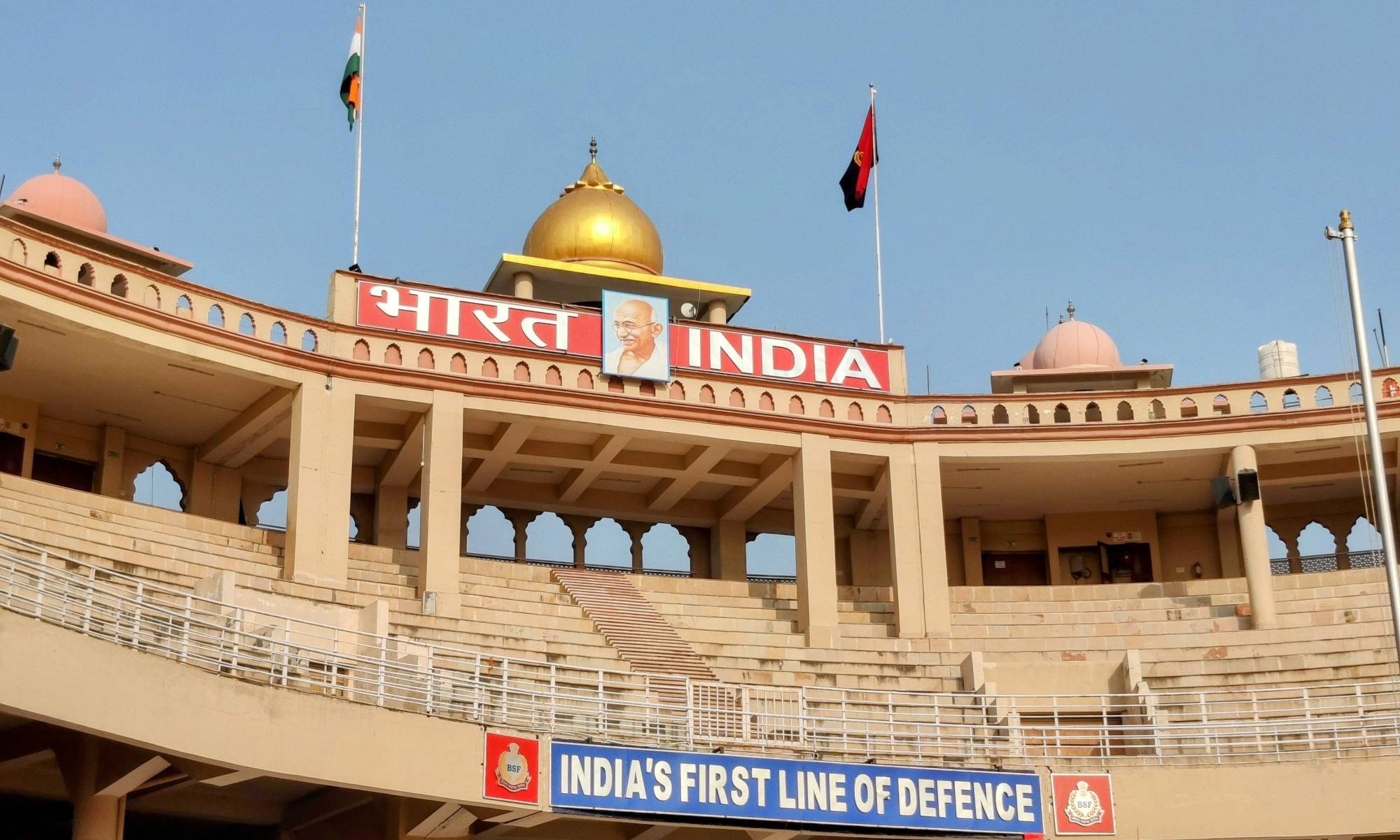
After a leisurely morning and a delightful breakfast, we had an exciting plan for the day – attending the renowned flag-lowering ceremony at the Attari-Wagah border, a significant location between India and Pakistan. Join us as we relive our experience and share the mesmerizing spectacle that showcases the shared history and complex relations between these neighboring nations.
A Memorable Journey to the Border:
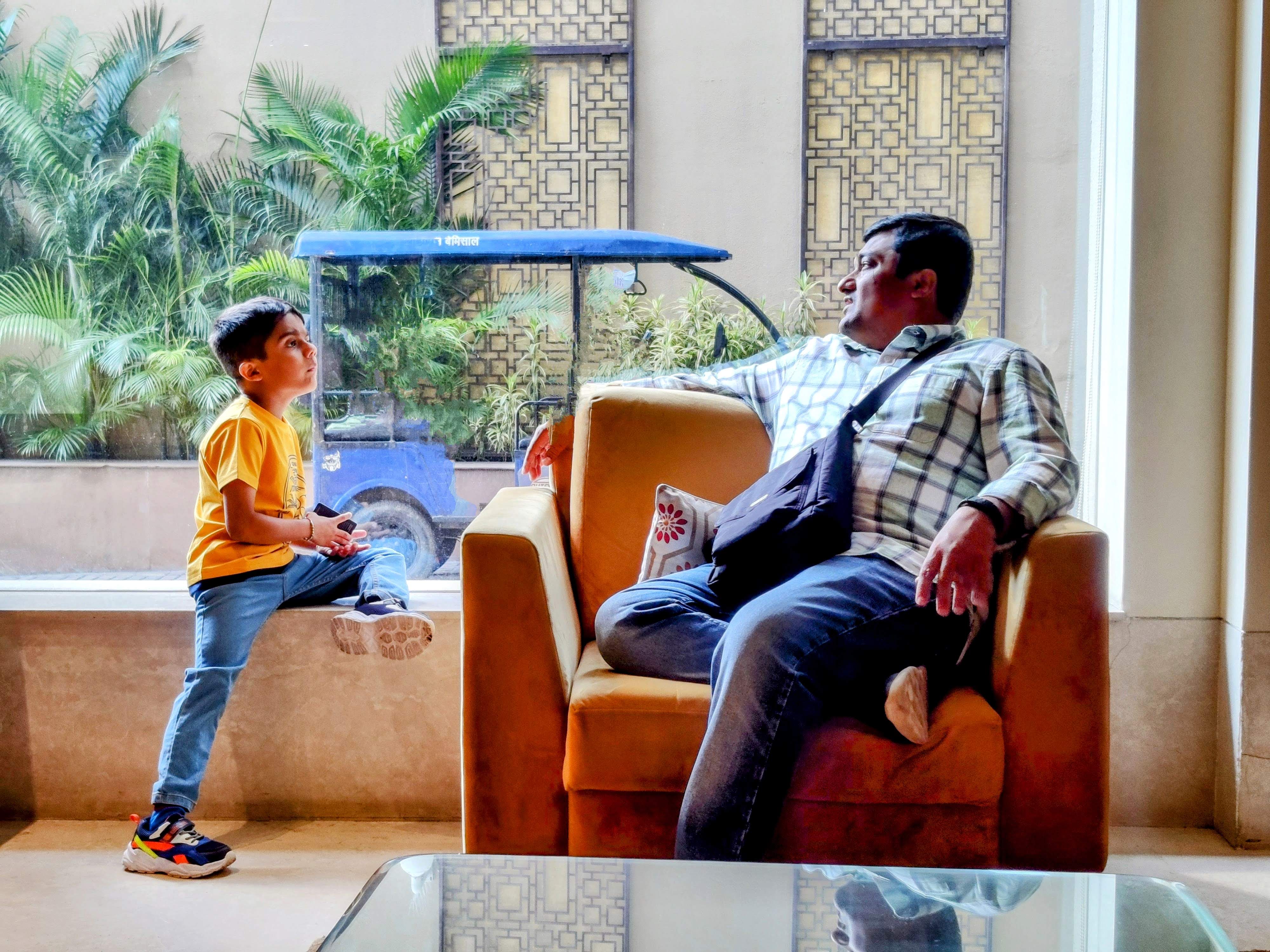
With our hearts set on witnessing the flag-lowering ceremony, we booked a cab to take us to the Attari-Wagah border, and our Uber driver from the previous night offered us a good deal roundtrip for about 1600 bucks. Around 1:30 – 2:00 pm, our driver arrived, and we embarked on a 30-45 minute drive to reach our destination. Anticipation filled the air as we looked forward to the grandeur of the event awaiting us.
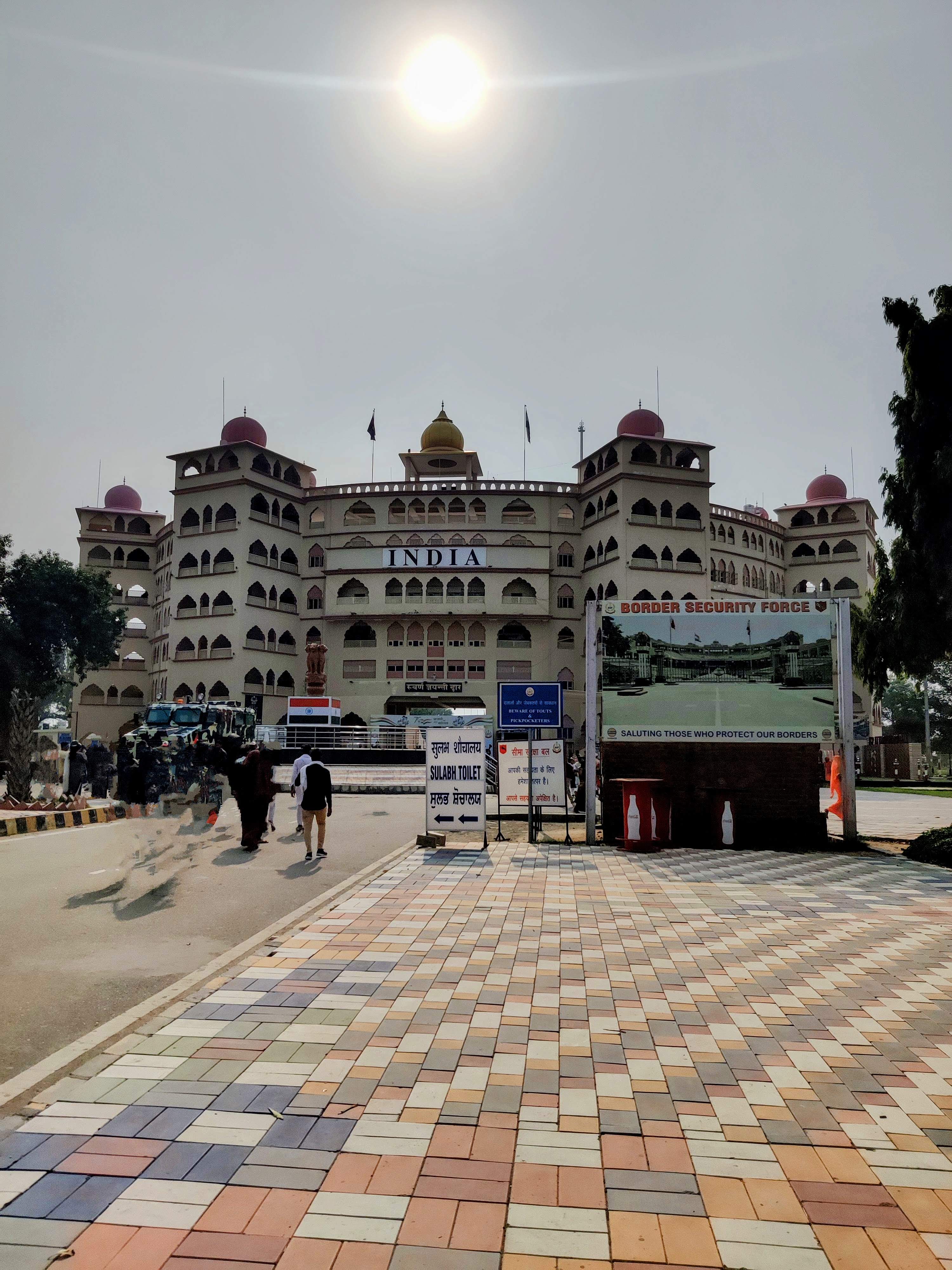
A 10-minute walk from the parking area led us to the main stadium. There was a security check, and we were not allowed to carry belongings inside, but there were plenty of options for snacks. Although the ceremony was scheduled for 5:15 pm, we arrived before 3:00 pm to secure the best seats. The best part is, the event is free for everyone to attend.
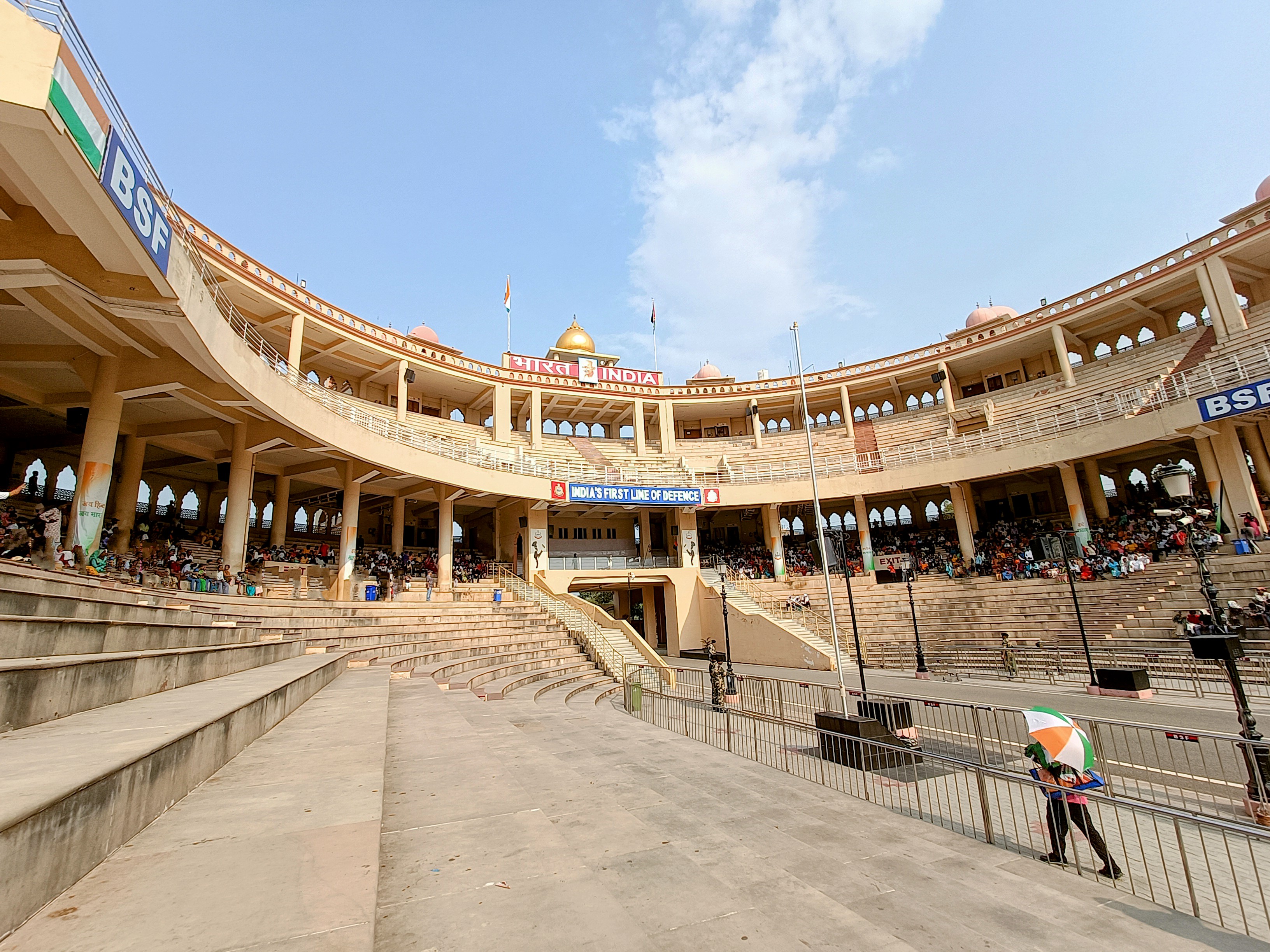
We also discovered that there are VIP sitting areas available on both sides of the road that has chairs and provides unobstructed views of the ceremony. We had no knowledge of the same and how to opt/book for VIP sitting. TripAdvisor does provide some information on the process.
The Historical Significance:
The Attari-Wagah border holds significant historical importance, especially during the partition of India in 1947. It became a tangible boundary between India and Pakistan, serving as a constant reminder of their shared history and ongoing relationship.
The Flag Lowering Ceremony:
The flag-lowering ceremony at the Attari-Wagah border is a dazzling display of patriotism, military precision, and spirited rivalry between India and Pakistan. Held every evening just before sunset, it captivates the crowds on both sides of the border.
Fascinating Facts about the Ceremony:
A Grand Spectacle: The ceremony draws an enormous number of spectators, with passionate onlookers filling the stands on both the Indian and Pakistani sides. The atmosphere buzzes with energy as people cheer, chant slogans like “Vande Mataram” and “Bharat Mata Ki Jai,” and proudly wave their national flags.
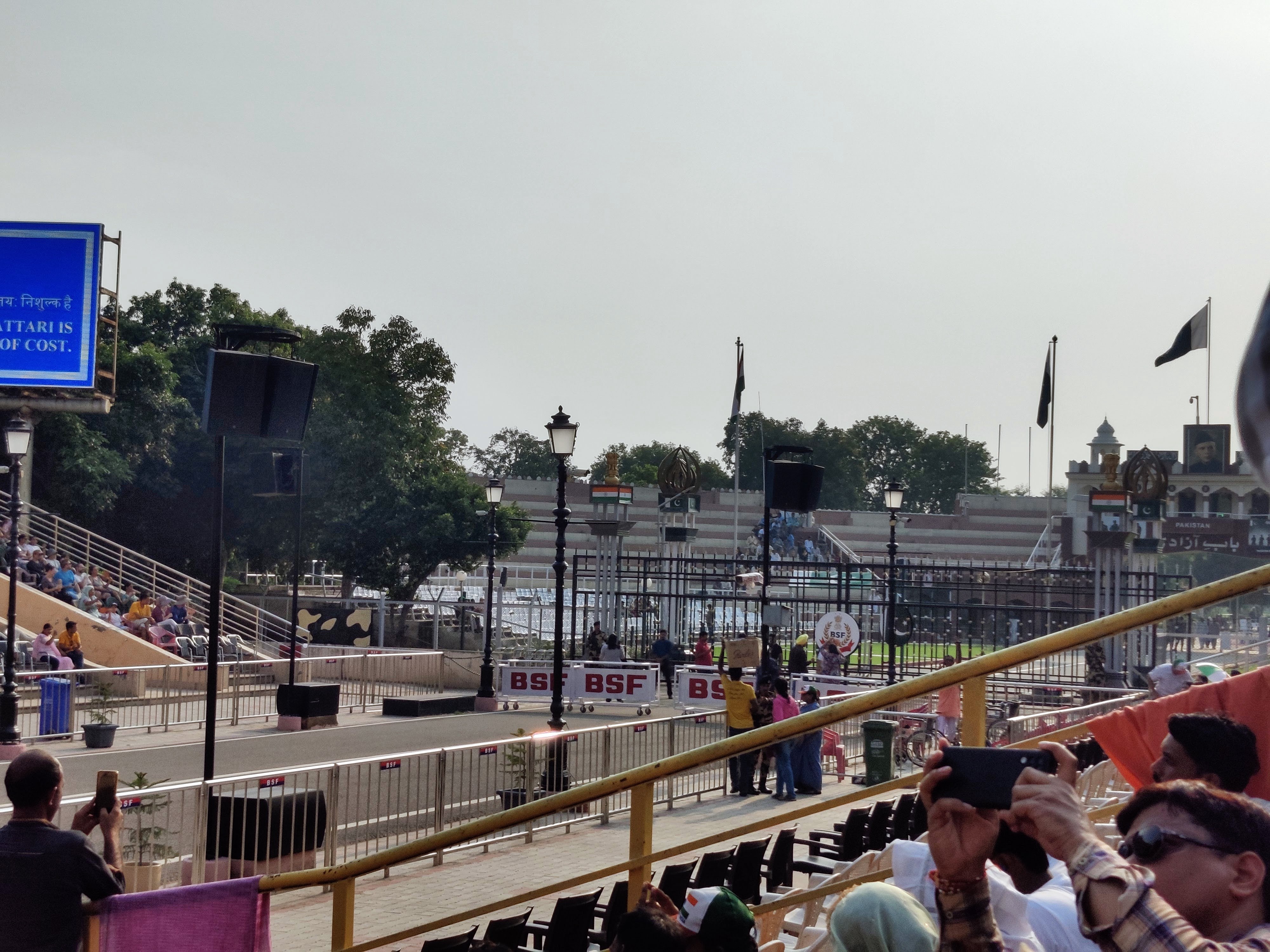
The Wagah Gate: The iconic Wagah border gate symbolizes the shared heritage and hopes for peaceful coexistence. Painted in vibrant colors, it serves as a striking backdrop, enhancing the visual appeal of the ceremony.
The March and Drill: Border security forces from both nations engage in a meticulously choreographed drill, showcasing high kicks, synchronized foot stomping, and powerful posturing. The display highlights their strength, coordination, and reverence for their respective countries.
Closing of the Gates: As the ceremony reaches its climax, soldiers from both sides simultaneously lower their national flags. The resounding slam of the gates signifies the end of another day of bilateral activities.
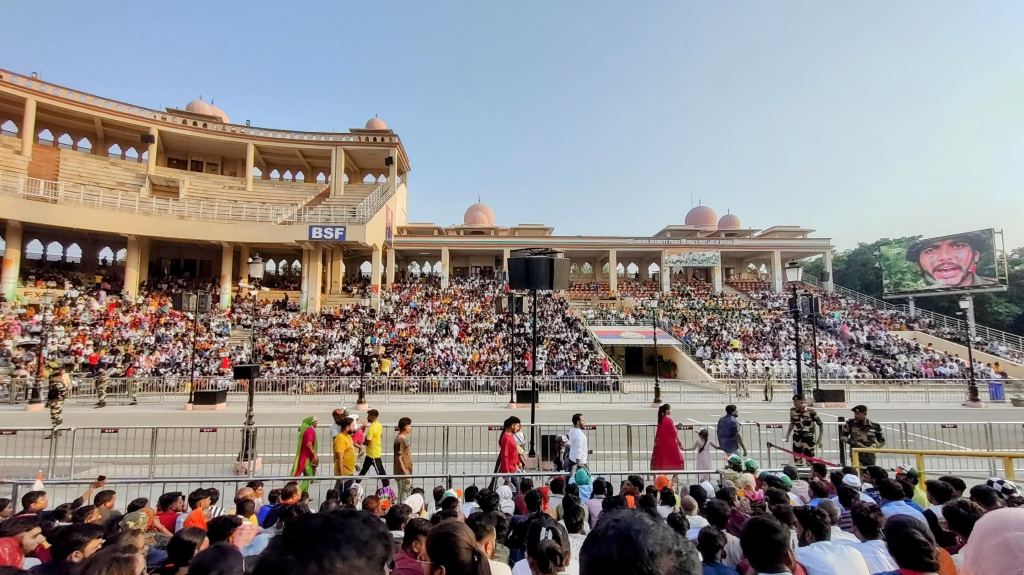
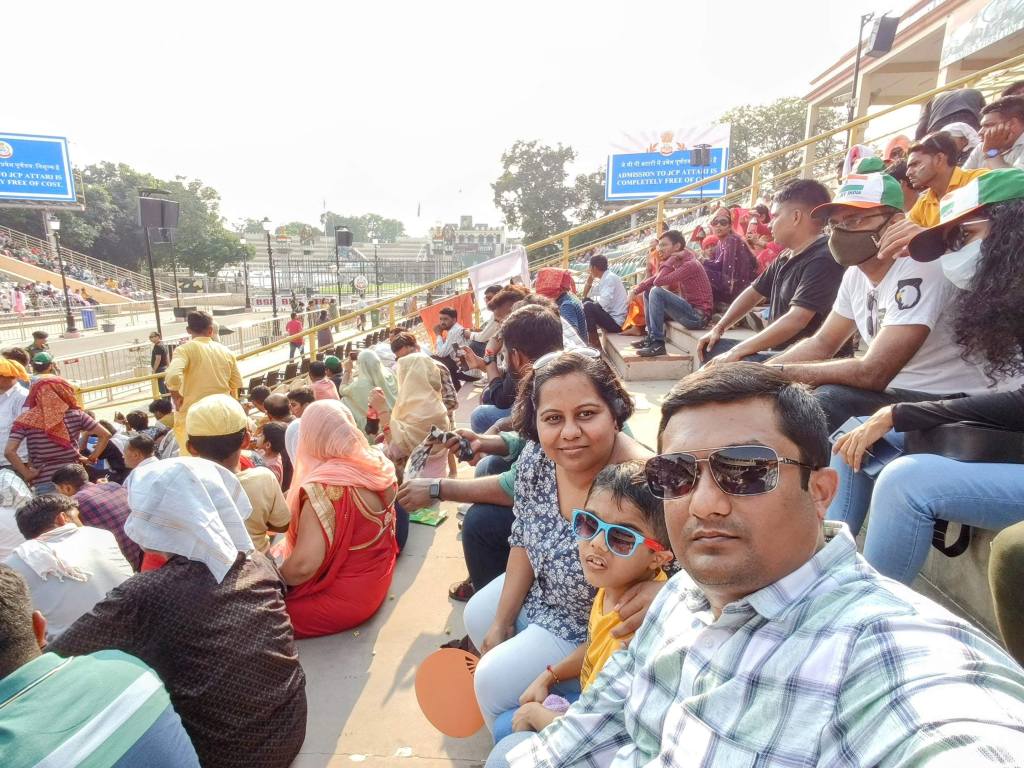
Patriotic Fervor: The atmosphere pulsates with fervent patriotism. Onlookers passionately sing national anthems, wave flags, and participate in spirited chants, creating a profound sense of pride and unity. At its peak, the atmosphere is so charged that if BSF opens the gate, the Indian crowd would conquer Lahor in just a couple of hours.
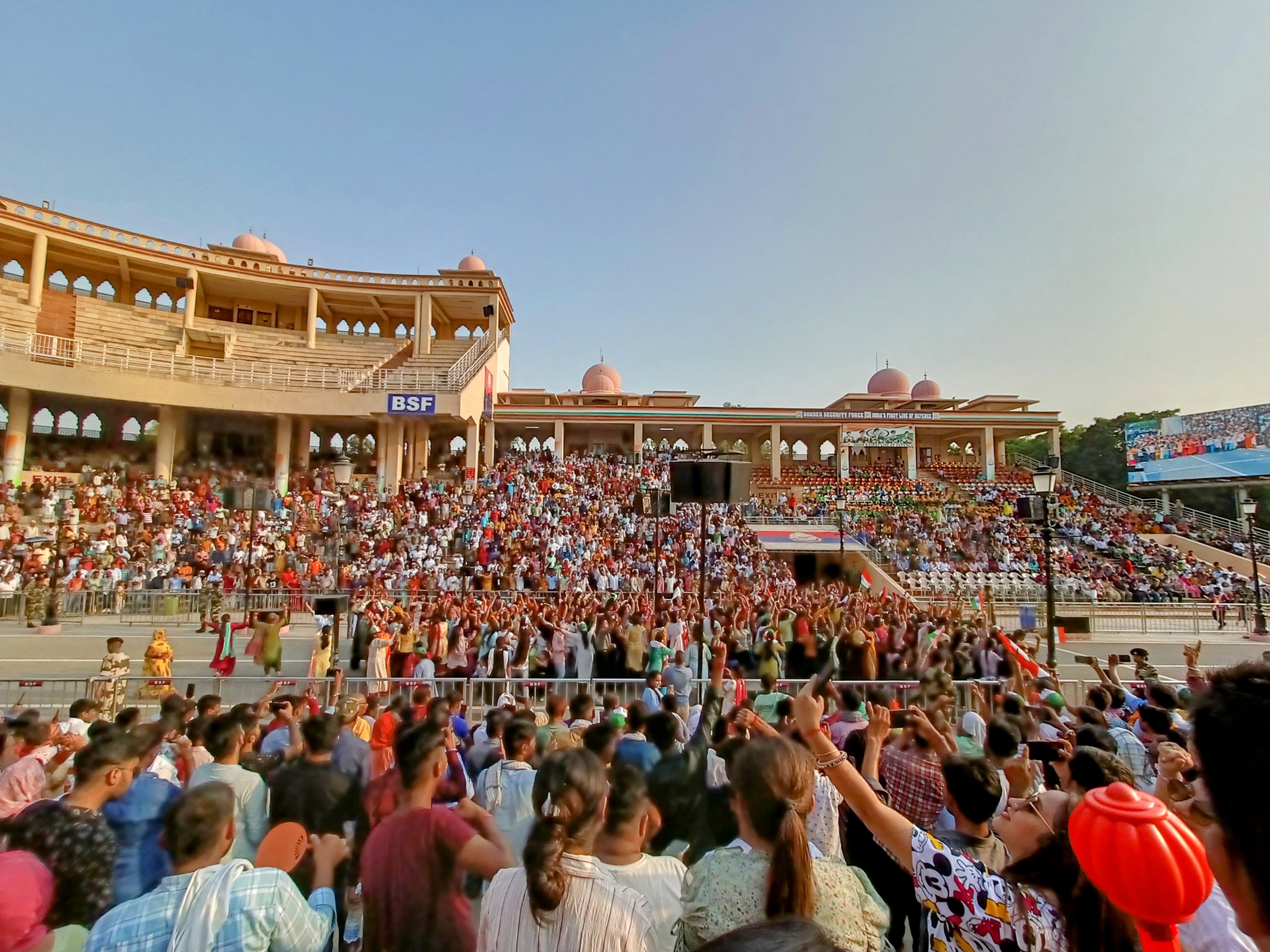
Friendly Rivalry: Despite the intense display of rivalry, there is an underlying spirit of camaraderie. Before the gates are closed, soldiers from both sides share handshakes, forging momentary bridges of friendship amidst the charged ambiance.

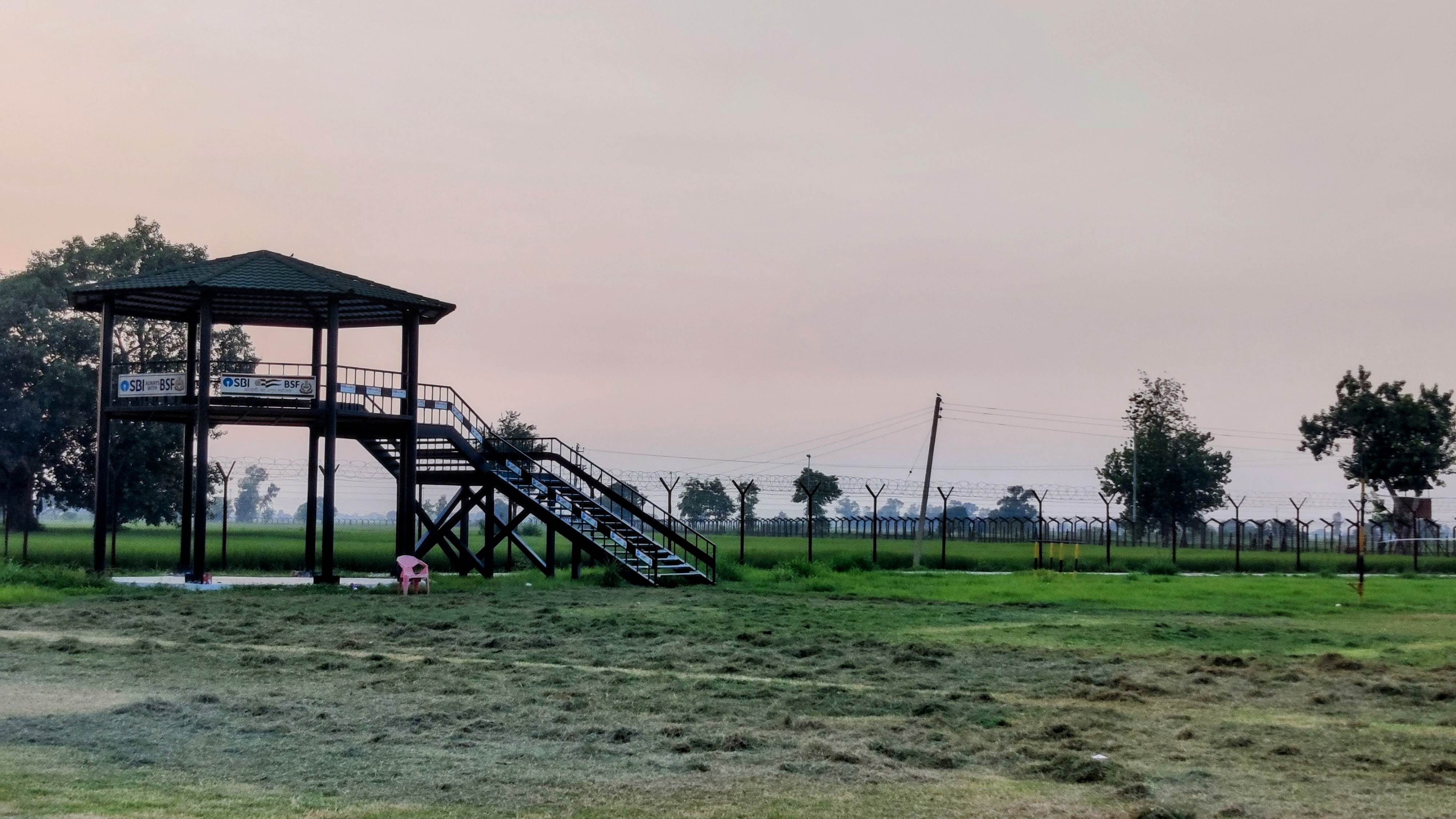
As the evening sun began to set, we bid a reluctant farewell to the Attari-Wagah border, cherishing the memories of an unforgettable experience. The flag-lowering ceremony, with its historical significance and captivating rituals, left an indelible mark on our hearts. The Attari-Wagah border not only represents a geographical divide but also serves as a poignant symbol of the intertwined history and relationships between India and Pakistan. As we returned to our hotel, our spirits were high, eagerly looking forward to the next day’s adventure – visiting the iconic Golden Temple, a spiritual sanctuary of unparalleled allure.
If you liked reading this post or find it useful, please like, share, and subscribe.
We would love to hear from you. Use comments to share your thoughts!
 One Plus One Three
Established on February 1, 1977, the National Rail Museum is more than just a repository of artifacts; it’s a celebration of India’s progress and unity. By showcasing the evolution of Indian Railways, the museum pays homage to the visionaries and engineers who laid the tracks for a brighter future. As visitors traverse its galleries, they’re reminded of the pivotal role railways have played in shaping India’s identity and fostering connectivity across the nation.
https://www.indianetzone.com/68/national_rail_museum.htm
LikeLike